

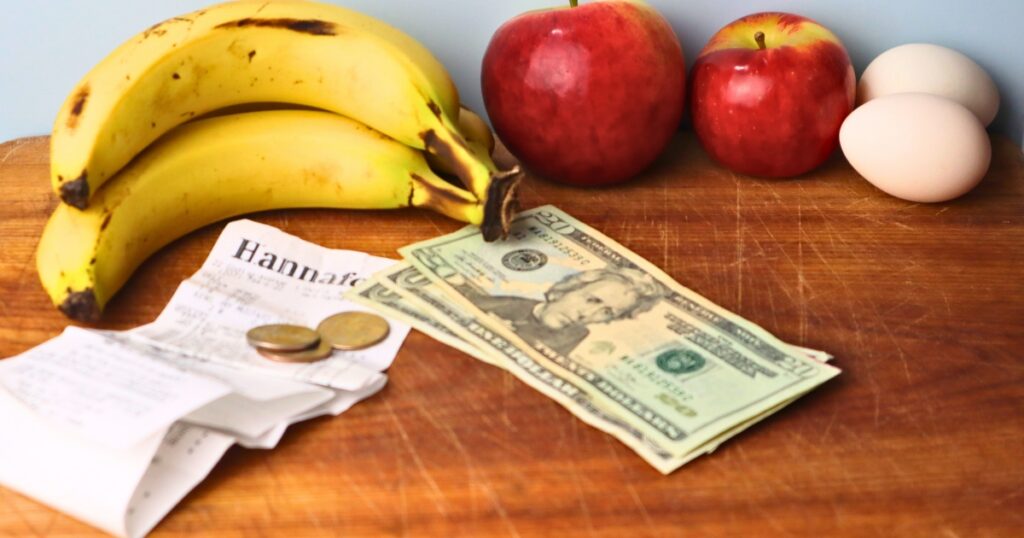
I don’t know about you, but yesterday morning I filled up the tank on my 1998 Chevy Silverado and what used to cost me about $52 a few weeks ago rang in at a whopping $72! We just can’t seem to catch a break with our wallets in the last several years. The US-China trade war in 2018, Covid-19, then the post-pandemic inflation, the Russia/Ukrainian war, and now conflict with Iran, just to name a few events. While there are many things we cannot control, we can choose to focus on what we can do. In this post I will show you how to cut your grocery bill in half for your family. Simple strategies, nothing complicated. Let’s get into it…
This post contains affiliate links. See full disclosure here.
Plan Meals Around What You Already Have
If you get into the habit of checking your pantry, freezer and fridge inventory before you go shopping, you can mitigate a lot of food waste (wasted money). Think of how much you could save over the course of a year! So before your next shopping trip take inventory-write down what you have for produce, meats, staples, etc. Keep a list or clipboard on the side of your fridge/freezer categorized by food type. If you have multiple freezers or refrigerators, write down where it is located so you don’t have to dig around and waste time. Think of at least 2-3 meals you can make with what you already have at the house. Then only purchase what you absolutely need to fill in what’s missing (some fresh produce, dairy, etc.). You can easily save $20-$50/week with this method.
Shop With a “Strict List” But a “Loose Plan”
This isn’t rigid, hardcore planning. Pick 5-7 core meals that contain overlapping ingredients. This allows you to take advantage of sale prices, while also streamlining things in the kitchen. For example, if ground beef or turkey is on sale, you can buy enough to make tacos, pasta with meat sauce, burger and gravy over mashed potatoes, shepherd’s pie, meatball subs, etc. You can have several meals that use the same low-cost base ingredient. This will equal fewer random purchases, leading to less waste.
The “strict list” means you plan ahead for what you are going to buy and stick with it, not deviating and wasting money on impulse purchases. However, you also can maintain a “loose plan” mindset. Try to remain flexible if you come across a good sale you didn’t know about ahead of time. For example, if you were planning on ground beef being your protein star for the week, but whole chicken is on sale for a great price, change your plan. You can have roasted chicken one night, then chicken tacos, chicken soup, chicken pot pie, etc. The key is to go armored with a plan, a list and the ability to adapt on the fly for even more savings.
Cut Back Meat Portions
Meat is one of the most expensive, if not the most expensive category in your grocery budget. This is one of the biggest tips on how to cut your grocery bill in half. Cutting back, your meat portions and stretching it further instead of cutting it out is more favorable in my opinion. (I’m sure you would agree. Broccoli just isn’t a substitute for beef or chicken, lol.) For example, there is a breakfast casserole recipe we really like. It calls for 2lbs of bacon for just one 9″x13″ pan. Bacon is not cheap by any means. Two pounds of bacon would be about $14 in my area.(When not on sale.) For just one ingredient in one casserole! That’s asinine! I cut the bacon amount to 1/2lb and everyone still loves it. The bacon is more of a “seasoning” this way and costs $3.50 instead of $14. The casserole has eggs and tater tots as the main ingredients. The link to the recipe I am referring to is here.
Other ways to stretch meat in recipes is adding rice and beans to taco meat and burritos, oatmeal or breadcrumbs to meatloaf, ground turkey and lentils in sloppy Joe’s or chili. If you cook lentils in broth they take on more of the flavor. White mushrooms are generally cheaper than ground meat and can be minced and added to burgers, meatloaf, meatballs, spaghetti sauce, etc. Adding eggs to burgers and other ground meat recipes is also a good way to stretch your dollar. Cutting back meats and adding more potatoes, rice, etc. in soups and casseroles is another idea.
Switch to “Ingredient Based Meals”
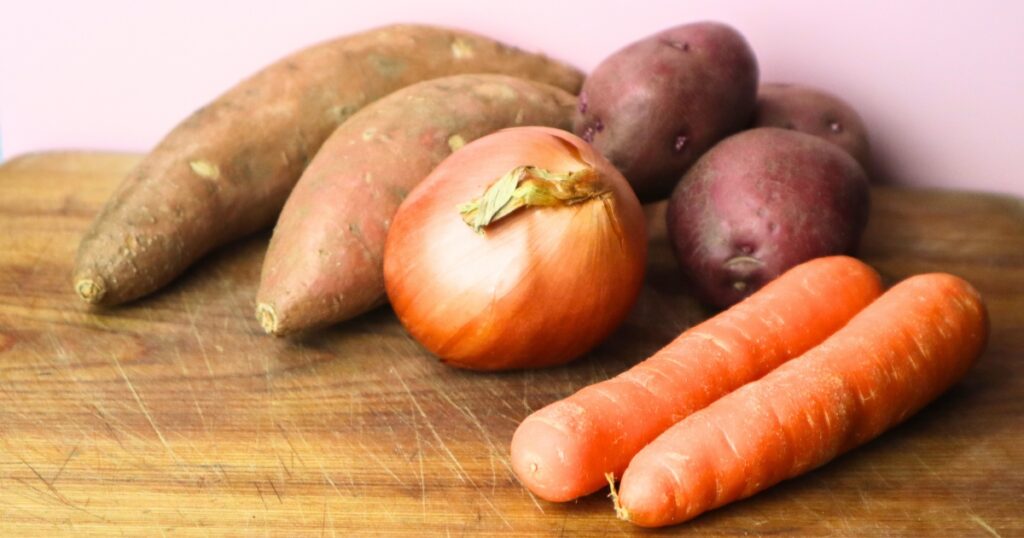
Prepackaged foods, meal kits and pre-cut fruits and veggies cost more. Convenience comes at a premium. Instead of buying a jar of cheese sauce for $4, you could buy an 8oz block of cheese for $2.25 and use it to make double the amount of sauce homemade. AND you won’t be eating MSG, seed oils, yellow #5, etc. It’s a win-win. Focus on whole ingredients to get more mileage out of your budget and it’s better for you too. Things like potatoes, onions, meats (not precooked/pre-breaded), veggies and fruits, rice, flour, beans, pasta, etc.
Frozen Over Fresh
Utilize the frozen fruits and veggies section of the store. These are more often than not, actually fresher than the “fresh” produce in the store. They are picked/harvested at peak ripeness when vitamin content is at its highest. Then frozen to preserve those goodies. The “fresh” foods in the produce section have been picked before they were ripe to ensure less spoilage during transit. Then at or near the destination they are artificially ripened with ethylene gas before being stocked on the shelves. That is why “greenhouse” tomatoes in the store do not have the rich, red color your garden tomatoes have but are more of a pale red even orange shade. And the flavor? Who are they kidding?! Eew. They tase like water. Just not the same.
Frozen produce won’t spoil. Well, within reason. If you keep frozen veggies and fruits in your freezer for a year or more they will probably get “freezer burnt” and not be palatable. We have all bought fruit and vegetables thinking we would eat them all before they went bad only to throw them in the compost heap a week later when they are all black and slimy, lol. You can cut way back on food waste by utilizing frozen fruits and veggies. Much of the time they are cheaper frozen anyway.
Cook Once, Eat Twice
Things like ham, chicken, roasts, etc. can be cooked at the beginning of the week and utilized in different ways for a few days. A ham can be roasted and eaten with sides the first night. Then some of it can be cubed up and used in potato hash with onions and peppers. The bone and anymore bits of ham can be used in pea soup. If it is a large ham and you have a small family, you can make ham sandwiches too. You could add ham to mac and cheese. So many ways, just get creative. If you don’t like leftovers or get overwhelmed by the amount from one meal (such as buying a large ham at a great price, but you have a small family or it’s just you) you can always freeze portions of it for later. No one says you have to eat the whole thing everyday until it’s gone. Make different meals out of the same type of protein and freeze in smaller portions. Then you will have a “frozen menu” to easily choose from. Also, learn how to can if you haven’t already. This is a great way to buy a larger amount of meat or fruits/veggies on sale and can it in smaller portions to make some really easy meals later. One of my favorites is canned deer meat over mashed potatoes or rice. You could do the same with beef, turkey, pork, etc.
Stop Overbuying for “Just in Case”
This one is a bit of a hypocritical statement, because if you know me, you know I’m somewhat of a “prepper”. I like being prepared. If one thing is predictable about life, it is that life is unpredictable. Now, we cannot feasibly be “ready for anything”. Except our mindset. Knowing and excepting that we will constantly have to adapt, be flexible, figure things out, etc. will help us way more than any amount of canned beans ever would. So, while I think it is wise to have a little bit of stock to lean on, don’t go overboard. Remember, whatever you buy you will then have to manage, rotate, use up, organize, and so on. For your sanity and for your wallet’s sake, don’t go crazy here. If you have a little bit of emergency food stocked, try only buying what you need for the current week and nothing more. Get into the habit of using up what you have before you buy more. This saves so much money.
Simplify Breakfast and Lunch
This is another easy way to cut your grocery bill in half. If you simplify breakfast and lunch it takes the guess work out in the mornings and during the middle of a busy day. Think about rotating eggs/toast, oatmeal, muffins, etc. during the weekdays and French toast/pancakes on the weekends or something like that. Oats are not very expensive per serving and eggs, for now, have gone back down to a more reasonable price. Although that will probably change with rising fuel costs. Lunches can be sandwiches or leftovers. Chicken, tuna, egg salad, bologna. Easy peasy.
Stop Buying “One-Use” Ingredients
If an ingredient only works for one specific recipe, unless it is something you make all the time skip it. These “one use” purchases eat into your budget and clutter up your fridge and pantry.
Change How You Shop (Not Just What You Buy)
Stick to the perimeter of the store and the staple/baking isles. Avoid the center isles that are full of prepackaged foods. These are expensive. You can make homemade cookies, crackers and treats for a fraction of the price, and they are better for you too. Check the price per unit, not just the sticker price. Although generally speaking, foods are cheaper in bulk, that is not always the case.
Limit Snacks (Strategically)
Don’t cut out snacks entirely, just limit and simplify them. Homemade popcorn, apple slices with peanut butter, bananas, homemade cookies or muffins, you get the idea. Buying prepackaged snacks gets expensive fast.
Set a Weekly Grocery Cap
Set a limit on what you are willing to spend per week. Adjusting your meal plan to fit your budget is easier than the other way around. You might find tools such as the cash envelope system helpful with this. Simply set aside your budgeted amount, cash, for groceries in an envelope. Make your meal plan and shopping list, check prices and make it fit your cash limit.
Track What You Throw Away
This is a real eye opener. None of us like to waste food. It’s wasted food and wasted money. Wasting resources does not make us feel good about ourselves. Write down what gets wasted, even for just one week and you will see that most of us overbuy at the store. Make adjustments accordingly.
Rotate the Same 10-15 Meals
This way it keeps you from getting bored. But not so much variety that you overspend on special ingredients. And it makes things easier in the kitchen too!
Drink Mostly Water
Soda, juice, chocolate, milk, alcohol, even good coffee costs add up. This one tip alone saves you $10-$30/week! Growing up in a family of 10, the only time we had milk was during a meal. Other than that, it was mostly water.
It doesn’t Have to be Difficult
Cutting your grocery bill in half doesn’t have to be hard. Setting up a simple meal plan and shopping strategy gives you more flexibility in your budget. You do not have to implement all of these tips to see a difference in your grocery bill. Pick a few, easily doable things from this list to use this week and start saving. If you need more inspiration, check out my post “How to Feed a Family of Four for $75/week” with a free printable menu and grocery list. Not sure what to make for supper tonight but want to save money by not ordering out? I’ve got you! Check out my post “Cheap Pantry Meals When You Have ‘Nothing’ at Home.”
At the time of writing this post, Easter is practically here. Check out my video on how to feed 6+ people Easter dinner for $40! I give you my menu and walk you through the whole cooking process and prices for everything.
I hope you found this helpful. Take care everyone! ❤️

Leave a Reply
You must be logged in to post a comment.